
A proprietary drug
Discovery platform
Scientific background
20 years of basic research resulting in globally recognised expertise.
Over the last 15 years, Aziz Moqrich, doctor in neurosciences, and his teams at the CNRS IBDM/Aix-Marseille University have put their globally recognized skills to good use to improve our understanding of the biology of pain and to explore new ways in which to treat it. This research led to the discovery of the ability of the TAFA4 protein to control pain and an understanding of the underlying mechanisms of action. This work has resulted in several international patent depositions and publications in prestigious scientific journals.
The creation of Tafalgie Therapeutics facilitated the passage from basic to applied research, making it possible to launch the programmes underway with the hope of establishing a new paradigm in the domain of the preventive and curative treatment of acute and chronic pain.


Ardem Patapoutian
« Aziz Moqrich, one of the founders of Tafalgie, was the first postdoctoral fellow in my laboratory. He is a fantastic scientist and I take great pride in his successes. I have been watching the progress of TAFA4 research related to chronic pain in his lab with great interest. I think this work is very promising for translational work. I am excited to help Tafalgie go forward with this exciting direction. »
Ardem Patapoutian, PhD – Nobel Prize in Physiology or Medicine, 2021 
Presidential Endowed Chair in Neurobiology – Professor, Department of Neuroscience – Investigator, Howard Hughes Medical Institute – Scripps Research La Jolla, CA
The discovery at a glance
- Dr Aziz Moqrich, CSO of Tafalgie Therapeutics, was responsible for a major scientific discovery concerning the activity of the endogenous TAFA4 protein secreted by a particular subset of sensory neurons called C-LTMRs (type C low-threshold mechanoreceptors), which are highly conserved in mammals.
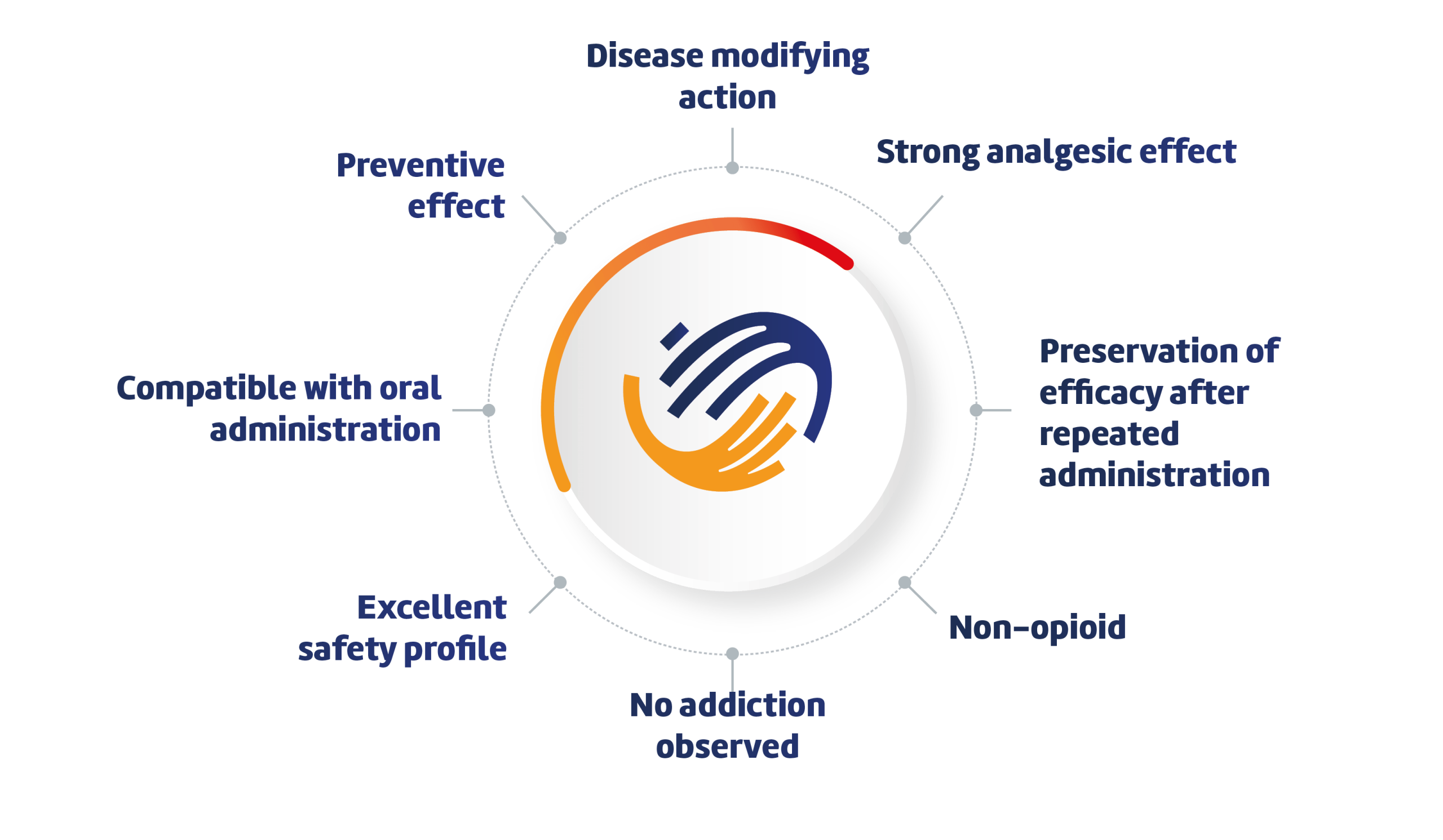
- As an endogenous non-opioid protein, TAFA4 was rapidly shown to have a favourable toxicity profile, with excellent safety and no development of tolerance phenomena in preclinical models.
- Unlike current analgesics, for which the principal mechanisms of action are based on the blockade of certain channels, TAFA4 and its peptide derivatives are involved in regulating and modulating the propagation of pain signals between the peripheral and central nervous systems.
- This modulation of nociceptive sensory neurons has been shown to be as effective as the most powerful analgesics currently available. TAFA4 is a disease-modifying drug in that it helps to establish the original balance of neurons involved in the pain signalling pathway.

Gate control theory
Gatekeeper neurons
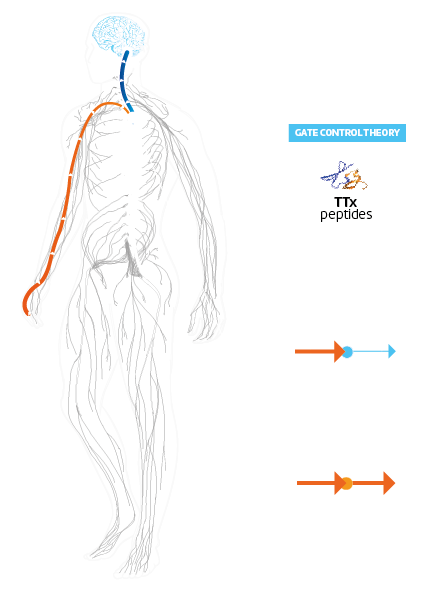
The work of Tafalgie Therapeutics is based on gate control theory, according to which the transmission of tactile and pain signals to the central nervous system is regulated by a specific category of interneurons in the spinal cord. These neurons are known as gatekeeper neurons.
According to this theory, injuries, such as cuts and burns, affect the efficacy of these gatekeeper neurons, allowing both innocuous and noxious stimuli to activate the pain pathway. This phenomenon is known as allodynia (in
which normally painless stimuli provoke pain) or hyperalgesia (characterised by a heightened sensitivity to painful stimuli).
Revolutionary scientific discoveries
The evolutionary discoveries of the team directed by Dr Aziz Moqrich have shed light on the mechanism underlying the decrease in regulatory neuron activity provoked by injury.
They have successfully demonstrated that the TAFA4 protein secreted by humans can block the hypersensitivity induced by injury by re-establishing normal gating activity.
Ces
Mechanism of action of the TAFA4 protein
TAFA4 re-establishes the inhibitory activity of the gatekeeper neurons in the propagation of painful signals.
TAFA4 is a small endogenous neurokinin secreted by type C low-threshold mechanoreceptors (C-LTMRs). These C-LTMRs were first characterised in 1939 and were thought to transmit only agreeable touch sensations. Dr Aziz Moqrich and his teams identified TAFA4 as a molecular marker of C-LTMRs and showed that this molecule strongly modulates the transmission of pain after injury.
Inhibition of pain propagation
The loss of TAFA4’s diminution results in an exacerbation of mechanical and chemical pain after injury and the maintenance of such pain over time. Conversely, the exogenous administration of TAFA4 increases the inhibitory tone of the spinal cord, reversing the decrease in gatekeeper inhibitory function induced by the lesion.
An excellent safety and efficacy profile
As an endogenous protein, TAFA4 is, by definition, safe (without toxicity). Furthermore, our preclinical studies have shown that the efficacy of this molecule is not decreased by repeated administration (no development of tolerance phenomena).
A revolution in the pharmaceutical treatment of pain
With their combination of efficacy and an absence of tolerance phenomena, our future drugs are candidate for leading a veritable revolution in the pharmaceutical treatment of pain, providing an alternative to existing drugs.
Therapeutic domains targeted
We will target indications with specific needs :

Acute
and chronic pain
Pain in populations suffering from highly diverse conditions (with different aetiologies, such as neuropathic pain, osteoarthritis and lumbago).

hospital market
For severe postoperative pain for example.

rare diseases
Causing pain for which there is currently no treatment or for which current treatments are not sufficiently effective and safe.

veterinary market
A preliminary licensing agreement in veterinary medicine.